
This post contains affiliate links. I may earn a small commission if you make a purchase through these links at no extra cost to you.
For a long time, creatine had an image problem.
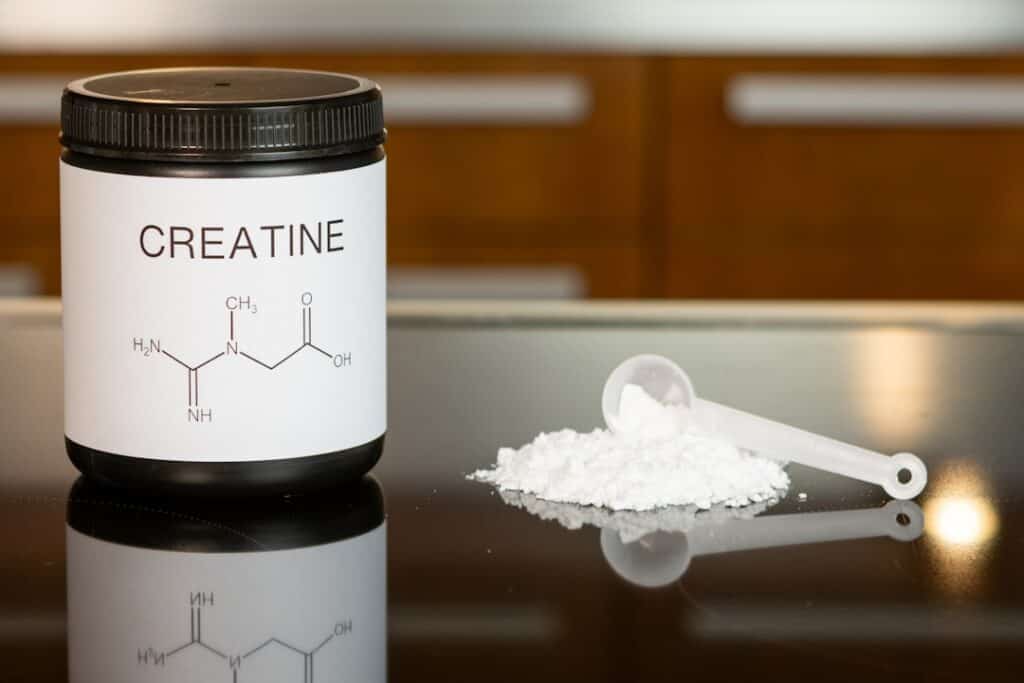
Tubs of white powder. Gym bags. Guys chasing a pump. If you were not lifting competitively or deeply embedded in fitness culture, creatine probably did not feel relevant to your life.
That association is outdated. SPINS data shows creatine surged 71.9 percent in the MULO performance channel for the 52 weeks ending November 30, 2025, extending 2024’s already strong 46.5 percent growth. Demand is broadening beyond young male athletes as women and older consumers adopt creatine for strength alongside emerging cognitive and longevity positioning. BYU Marriott School of Business
The research expanded. The audience followed. And the format is shifting in ways that matter for anyone who has ever struggled to take the same powder every single day.
What Creatine Actually Does
Your muscles store creatine as phosphocreatine, which your body uses to rapidly regenerate ATP, the primary fuel source for high-intensity muscular effort. When you train, phosphocreatine donates a phosphate group to replenish ATP faster than other energy systems can. More available phosphocreatine means more capacity for short, intense effort before fatigue sets in.
Supplementing with creatine saturates your muscle stores beyond what diet alone typically provides. The result is more power output, better training performance, and faster recovery between sets. This is the mechanism that has been studied and confirmed across more than 500 peer-reviewed studies. It is one of the most research-supported supplements in existence.
Where the Research Has Actually Gone
The muscle and performance benefits are settled. What is newer is where researchers have been looking since.
Aging and muscle preservation. A systematic review and meta-analysis of randomized controlled trials found that creatine supplementation combined with resistance training significantly increases muscle strength and lean tissue mass in older adults, with time-dependent effects particularly notable in interventions lasting up to 32 weeks. Creatine monohydrate may have application for treating age-related sarcopenia, osteoporosis, and frailty, with multiple studies showing benefits in older adults and those with metabolic and neuromuscular disorders. As an estimated 200 million adults over 65 are projected to experience sarcopenia by 2050, this is not a niche finding. Healthy PeopleFierce Healthcare
Women and menopause. A 2025 randomized controlled trial of 36 women in perimenopause or postmenopause found that eight weeks of creatine supplementation improved reaction time and reduced mood swing severity. Randomized trials combining 5g/day of creatine with supervised resistance training show strength and lean mass gains over 12 to 24 weeks in older women. This is an area of active research, and the early signals are worth paying attention to. Health Affairs
Brain and cognition. This is where I want to be careful, because the headlines tend to outrun the evidence. A 2024 meta-analysis of 16 randomized controlled trials found that creatine may improve cognitive function, particularly memory, attention, and information processing speed. However, a 2024 EFSA scientific opinion reviewing the same body of research concluded that no causal relationship could be established for cognitive function claims in healthy adults at typical doses, partly due to methodological concerns with how the studies were analyzed. The picture is more promising in specific contexts: meta-analytic data associate creatine monohydrate with improvements in memory, attention, and processing speed, with suggested benefits under metabolic stress, such as sleep loss. If you are regularly sleep-deprived or in a high-cognitive-demand role, the case for creatine’s brain effects is stronger than for someone in baseline optimal conditions. The honest position is: promising, not proven for general cognitive enhancement. BYU Marriott School of Business
The Format Shift Nobody Warned You About
Powder works. The bioavailability is excellent, and the cost per serving is low. The problem is consistency. Mixing powder every day is a source of friction that causes people to stop. And creatine only works if you actually take it.
Creatine is showing up in stick packs, chews, and tablets alongside traditional powder. Brands positioning creatine broadly, not just for bodybuilders, are capturing a much wider market. Chews, in particular, have grown rapidly because they eliminate the mixing step entirely. You take them anywhere, no shaker required, no planning around water access. PubMed Central
Which brings up a problem that most people buying chews have no idea exists.
The Quality Problem in the Chew Category
In 2024, supplement manufacturer NOW Foods began testing creatine monohydrate gummies after noticing a mismatch between what some brands claimed on their labels and what seemed chemically possible. Using high-performance liquid chromatography, they found that five out of twelve products tested failed to meet label claims. Two contained only a fraction of the stated creatine dose. Three contained none at all. Market
Overall, there was a 46 percent failure rate to meet label claims. One top-selling brand that claimed 5g of creatine per serving contained 0.005g, essentially nothing. A 2025 follow-up by health tech startup SuppCo tested six of Amazon’s best-selling creatine gummies and found that only two contained the amount of creatine listed on the label. CVS Health
The reason is chemistry. Creatine is unstable in the presence of heat, moisture, and acidic pH, which are exactly the conditions present during gummy and chew manufacturing and storage. Some brands are formulating products that degrade before they reach the consumer. Others appear to be underdosing intentionally. The result is products that look and taste like creatine supplements but deliver no meaningful benefit.
NOW’s senior director of quality called on the industry to address what she described as a dearth of testing capacity, noting that none of the outside labs NOW has approved were capable of testing gummies for creatine content at the time of initial testing. The testing infrastructure for this format is still catching up to the product category. CMS
The brand I use is Momentous. Their creatine chews are plant-based, Creapure-sourced, and third-party tested, which matters more in this category than in almost any other supplement category, given the testing data above. I switched from powder to the chews a few weeks ago because I was inconsistent with mixing, and consistency is the variable that actually determines whether creatine works. The format takes some getting used to; these are tablets, not gummies, and the standard five-gram dose means five tablets at a time. But the quality standard is not something I am willing to compromise on, and Momentous clears every bar that matters.
If you want to try them, the code MarcusClark gets you 14 percent off here: evolutionofwellness.com/what-i-use/momentus
What to Look For When Buying Any Creatine Product
Third-party testing certification is not optional in this category. Look for NSF Certified for Sport, Informed Sport, or USP verification. These organizations test the actual product against the label claim.
Creapure is the gold-standard source of creatine monohydrate. It is produced in Germany under strict quality controls and has the most consistent record of third-party testing in the category.
Avoid proprietary blends. If a product does not tell you exactly how much creatine is in each serving, that is information being hidden for a reason.
Five grams per day of creatine monohydrate is the standard evidence-backed dose for muscle saturation. Products dosed at below 3 grams per day are unlikely to deliver meaningful benefit, regardless of what the label says.
The Consistency Point
Creatine is not a supplement that works acutely. It saturates muscle stores over weeks of consistent daily use. Miss a few days, and the effect diminishes. The reason powder users often quit is not that creatine stopped working. It is because the format made daily compliance harder than it needed to be.
Whatever format you choose, the one you will take every day is the right one. That is the real variable. Everything else is secondary.
Try The Reset Compass free at evolutionofwellness.com/reset-compass. If building consistent daily habits is the challenge, not just with creatine but across your health, that is exactly what it was built for.
Sources
Creatine Sales Growth 2025, SPINS Data via Nutritional Outlook
https://www.nutritionaloutlook.com/view/strong-tailwinds-on-creatine-as-a-broader-range-of-consumers-recognize-its-many-benefits
Creatine and Cognitive Function Meta-Analysis (Frontiers in Nutrition, 2024)
https://www.frontiersin.org/journals/nutrition/articles/10.3389/fnut.2024.1424972/full
Creatine Cognitive Claims EFSA Scientific Opinion (2024)
https://efsa.onlinelibrary.wiley.com/doi/10.2903/j.efsa.2024.9100
Creatine for Sarcopenia in Older Adults Meta-Analysis (PMC)
https://pmc.ncbi.nlm.nih.gov/articles/PMC12752335/
Creatine for Older Adults including Sarcopenia and Frailty (Taylor & Francis, 2025)
https://www.tandfonline.com/doi/full/10.1080/15502783.2025.2534130
Creatine for Peri and Postmenopausal Women (Elizabeth Story MD, 2025)
https://elizabethstorymd.com/2025/11/creatine-for-peri-and-postmenopausal-women-why-it-matters-how-much-to-take-and-what-the-research-shows/
Creatine Gummy Quality Issues: NOW Foods Testing (Whole Foods Magazine, 2024)
https://www.wholefoodsmagazine.com/articles/16736-now-testing-identifies-creatine-gummies-failings
Creatine Gummies Market Growth and Quality Challenges (Nutraceuticals World, 2026)
https://www.nutraceuticalsworld.com/exclusives/creatine-gummies-boom-market-growth-meets-stability-quality-challenges/
Get posts like this in your inbox.
Every five days. Research-backed. Free.
About the Author
Marcus Clark is the founder of Evolution of Wellness LLC. He holds a Master of Public Health degree and a Lean Six Sigma Yellow Belt certification, with a background spanning clinical rehabilitation, personal training (ACE certified), healthcare administration, behavioral health program coordination, and public health research. Evolution of Wellness was built on the principle that health knowledge is always evolving, and the guidance people receive should evolve with it.
This post is for informational purposes only and does not constitute medical advice. Always consult your healthcare provider before making changes to your health routine.