
This post contains affiliate links. I may earn a small commission if you make a purchase through these links at no extra cost to you.
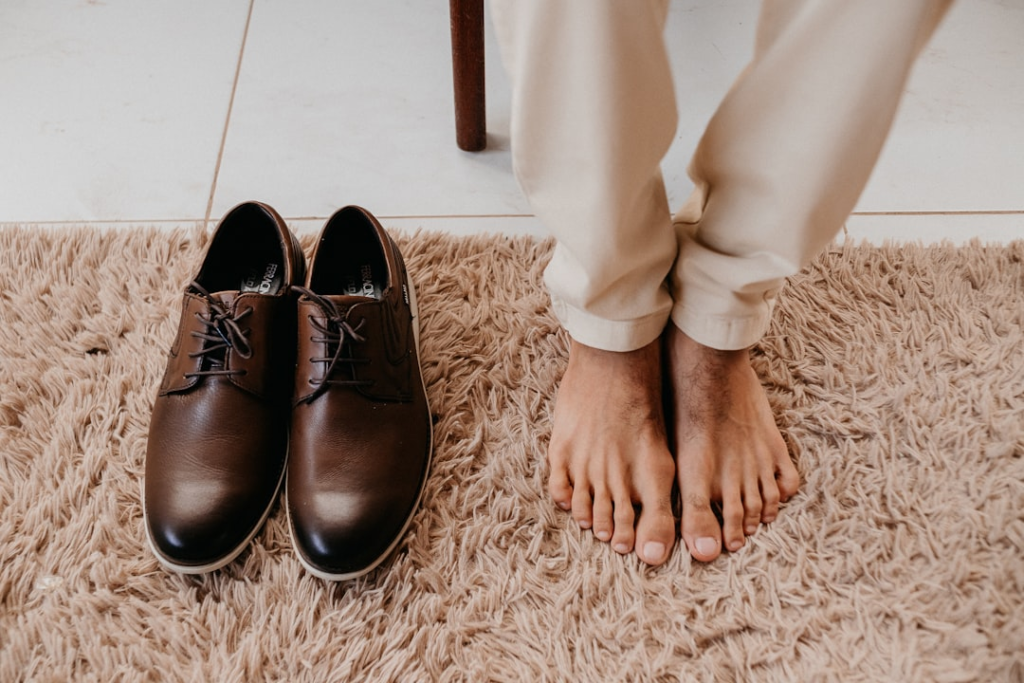
Photo by Vitor Monthay on Unsplash
I first came across the concept while working as a personal trainer. It made immediate intuitive sense given what I was seeing in clients and what I had observed working in physical therapy clinics. Patients with foot pain, ankle instability, chronic knee issues, hip tightness that never fully resolved. Many of them had spent decades in conventional shoes that were doing the mechanical work their feet were designed to do themselves. Once I understood that framing, a lot of what I had seen clinically started making sense in a new way.
I did more research. I switched my footwear. I have not gone back.
The difference in how I feel during training, how I move when walking and running, and the stability I have developed in my feet and ankles over five years is significant enough that I feel obligated to write about it. Not as a sales pitch. As something I genuinely wish someone had explained to me earlier.
What Conventional Shoes Are Actually Doing to Your Feet
Modern footwear is built around a specific design philosophy: protect the foot from impact, support the arch, and prevent the foot from doing things that feel uncomfortable. That philosophy produces shoes that feel immediately comfortable out of the box.
The problem is what happens over months and years of that support doing the work your foot muscles should be doing themselves.
Research published in Scientific Reports found that people who habitually wear conventional shoes with restrictive toe boxes and raised arch supports have significantly smaller intrinsic foot muscle cross-sectional areas compared to people who wear minimalist footwear or go habitually barefoot. The muscles responsible for arch support, toe function, and dynamic stability were measurably smaller and weaker in the conventionally-shod group.
A 2024 cross-sectional study comparing experienced runners in high-technology cushioned shoes with those who ran barefoot found reduced intrinsic foot muscle thickness, decreased ankle range of motion, and diminished dynamic postural control in the cushioned shoe group. A 2024 critical review on footwear and locomotor health concluded that arch support and cushioning weaken intrinsic foot muscles over time by reducing the demand those muscles would otherwise be required to meet.
An elevated heel changes more than just foot position. It shifts load forward onto the forefoot, chronically shortens the calf musculature and Achilles tendon, and alters the mechanics of every joint up the kinetic chain. The ankle, knee, hip, and lower back all compensate for what the heel is doing below them. Over years, those compensations become structural.
The narrow toe box of most conventional shoes compresses the toes together, restricting the natural splay that occurs when the foot contacts the ground. Toes have specific stabilizing functions during gait that get progressively limited when they cannot spread. Bunions and hammertoes are not primarily genetic conditions. They are, in significant part, structural adaptations to footwear worn over a lifetime.
Humans evolved moving barefoot across varied terrain. The modern shoe, as most people wear it, has moved us progressively further from that baseline. The feet adapt to whatever environment they are placed in consistently. Give them a narrow box, a raised heel, and passive arch support for decades, and they adapt to that. The adaptation comes at a cost that shows up later, often in places people never connect back to their footwear.
What the Research Shows About Barefoot and Minimalist Footwear
A 2024 systematic review and meta-analysis found that minimalist footwear interventions significantly improved intrinsic and extrinsic foot muscle volume, medial arch function, toe flexor strength, and neuromuscular control across athletic populations. Research confirms increases of 18 to 57 percent in intrinsic foot muscle size and strength over 12- to 24-week intervention periods.
Balance and proprioception improve with minimalist footwear exposure. The thin sole of a barefoot shoe transmits ground feel information that cushioned soles filter out. That sensory feedback is what the nervous system uses to make rapid adjustments in foot and ankle position during dynamic movement. Reducing it through thick cushioning reduces the quality and speed of those adjustments.
Gait mechanics change with minimalist footwear in ways that shift load away from the heel and toward the midfoot and forefoot, more closely resembling the natural foot strike pattern observed in habitually barefoot populations.
The honest caveat: the research on long-term injury reduction from minimalist footwear is still developing. Study quality varies. The mechanistic rationale is strong. The settled long-term outcome data is still catching up. This is a category where the early research is genuinely promising, not where definitive claims should be overstated.
Who Should Transition Carefully and Who Should Not Rush This At All
Barefoot footwear is not appropriate for everyone without qualification. The nuance matters.
People with active plantar fasciitis should not switch to barefoot shoes during a flare. Barefoot footwear increases load on the plantar fascia by removing passive arch support. The case for gradual barefoot shoe introduction is for long-term foot strengthening after an acute episode has resolved, not as an acute intervention.
People with severe flat feet, significant gait pathologies, diabetic neuropathy, or a history of stress fractures should consult a podiatrist or physical therapist before making any footwear transition. These are situations where the absence of structure can create risk rather than benefit.
For everyone else, particularly people who are currently asymptomatic and want to build long-term foot strength and movement quality, the case for gradual introduction is well-supported by both the research and clinical reasoning.
How to Transition Without Getting Hurt
The most common barefoot shoe mistake is switching too fast. The foot muscles that have been passive in conventional footwear are deconditioned. Asking them to suddenly handle the demands of minimalist footwear is similar to coming off several weeks of inactivity and immediately returning to full training volume. The tissues are not ready, and injuries follow.
A sensible transition for most people looks like this.
Start with walking, not running or training. Wear the barefoot shoes for 15 to 30 minutes of low-intensity walking for the first one to two weeks. This begins building the intrinsic foot muscles without overloading them.
Add foot strengthening exercises in parallel. Toe curls, short foot exercises, single-leg calf raises, and barefoot walking on soft surfaces like grass or sand all accelerate the adaptation the transition requires. This step is not optional.
If you want a written assessment of your current movement patterns and a personalized starting point for this kind of transition, I offer a Written Movement and Wellness Assessment at evolutionofwellness.com/services.
Increase duration gradually over four to six weeks before introducing the shoes to any structured training. The foot, ankle, and calf complex needs time to adapt to the new mechanical demands.
Expect soreness. Some muscle soreness in the feet, calves, and arches during the first several weeks is normal. It is the same response that follows any progressive training stimulus applied to muscles that have been underloaded. Pain that is sharp, localized, or persists beyond a few days warrants slowing the transition or consulting a professional.
For a full transition to training and daily use, the realistic timeline is six to twelve months. Not weeks.
The Toe Spacer Piece Most People Have Never Heard Of
Barefoot shoes give your feet room to function. Toe spacers take that further by actively working to return the toes to their natural anatomical position after years of compression in narrow-toed footwear. Wearing them regularly at home helps restore the natural toe splay that conventional shoes progressively reduce. The difference in mobility, stability, and overall foot function from consistent toe spacer use is something I notice clearly. It is the icing on the cake for anyone serious about the long-term project of returning their feet to a more functional state.
If you are making the transition to barefoot footwear, adding toe spacer work at home is worth investigating alongside it.
What Five Years of This Has Actually Produced
The brand I use is VIVOBAREFOOT. Wide toe box, zero drop, thin sole — everything that allows the foot to function the way it was designed to. I wear them for training and daily use and make an effort to choose wide-toe-box footwear for everyday situations as well: walks, work days, anything where I have a choice.
Five years in, what I notice is stronger, more stable feet; better ground feel during training; more ankle stability during lateral movement and single-leg work; and a connection between my feet and the ground that I simply did not have when conventional shoes were doing the stabilizing work for me.
The physical therapy context makes this feel even more significant in retrospect. A significant portion of the foot, ankle, knee, and hip issues I saw clinically made more sense after understanding what conventional footwear does to foot mechanics over time. Not all of it. But enough of it that I would not go back.
My only regret is not switching sooner.
If you want to explore the VIVOBAREFOOTlineup, the affiliate link is on my What I Use page: evolutionofwellness.com/what-i-use/vivobarefoot
If you want to check any of the research claims in this post against peer-reviewed sources, EvidenceCheck is free at evidencecheck.io
Sources
Foot Strength and Footwear Use — Minimally vs Conventionally Shod Populations (Scientific Reports) https://www.nature.com/articles/s41598-018-21916-7
Technological Running Shoes vs Barefoot Running on Intrinsic Foot Muscles (ScienceDirect, 2024) https://www.sciencedirect.com/science/article/pii/S1413355524005021
Barefoot and Minimalist Footwear Strength Training Systematic Review and Meta-Analysis (PMC, 2024) https://pmc.ncbi.nlm.nih.gov/articles/PMC12609320/
Foot Core Exercises and Minimalist Footwear Meta-Analysis (PubMed, 2025) https://pubmed.ncbi.nlm.nih.gov/39709752/
Footwear Choice and Locomotor Health — Critical Review (PMC, 2024) https://pmc.ncbi.nlm.nih.gov/articles/PMC11899058/
Transitioning to Minimal Footwear — Systematic Review (PMC) https://www.ncbi.nlm.nih.gov/pmc/articles/PMC5602809/
Barefoot Shoes and Plantar Fasciitis Transition Considerations (Barefoot Run Review, 2026) https://barefootrunreview.com/barefoot-shoes-plantar-fasciitis/
Get posts like this in your inbox.
Every five days. Research-backed. Free.
About the Author
Marcus Clark is the founder of Evolution of Wellness LLC. He holds a Master of Public Health degree and a Lean Six Sigma Yellow Belt certification, with a background spanning clinical rehabilitation, personal training (ACE certified), healthcare administration, behavioral health program coordination, and public health research. Evolution of Wellness was built on the principle that health knowledge is always evolving, and the guidance people receive should evolve with it.
This post is for informational purposes only and does not constitute medical advice. Always consult your healthcare provider before making changes to your health routine.