
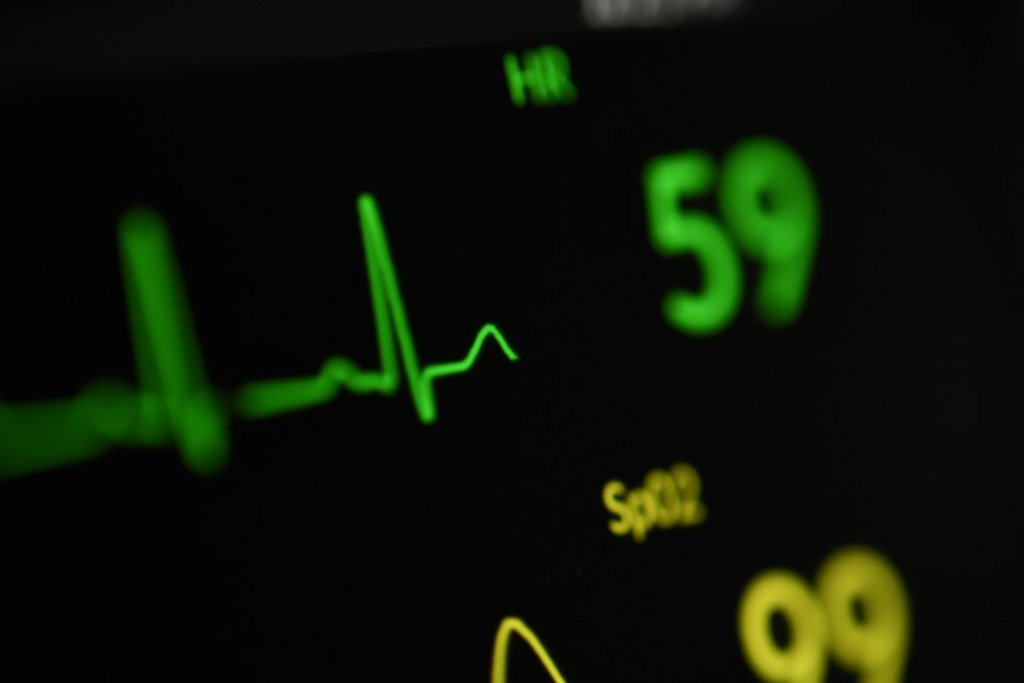
Photo by Joshua Chehov on Unsplash
One number cardiologists pay close attention to is one most people have never thought to check. It does not require a lab test, a doctor’s visit, or any equipment. You can get it right now by putting two fingers on your wrist and counting for 60 seconds.
Resting heart rate. The number of times your heart beats per minute when you are doing nothing at all.
It sounds too simple to matter. It is not.
A 25-year study following nearly 6,000 adults found that people whose resting heart rate increased over time were 69 percent more likely to die from any cause compared to those whose resting heart rate decreased. A separate analysis of more than 110,000 adults found that people with high resting heart rate had a 71 percent higher risk of dying from cardiovascular causes. These are not small associations buried in the fine print. They are consistent findings across multiple large studies over decades of follow-up.
And yet most people could not tell you what their number is.
What Normal Actually Looks Like
The standard range for adults is 60 to 100 beats per minute. Most healthy adults sit somewhere between 60 and 80. Trained endurance athletes often run well below 60, sometimes in the 40s. That gap isn’t just about fitness. It is a structural difference in how their hearts function.
The right way to measure it is first thing in the morning before you get out of bed, before coffee, before anything that might activate your nervous system. Sit or lie still for a few minutes, then count. A reading taken mid-morning after a commute and two cups of coffee is measuring your stress response, not your baseline. The baseline is what matters.
Why a Lower Number Means What You Think It Means
Here is the part most people have never heard explained.
When you train consistently with aerobic exercise that progressively challenges your cardiovascular system, the heart adapts. The left ventricle, the chamber that pumps oxygenated blood to the rest of your body, gradually increases in volume. It can fill with and pump more blood per contraction. That volume per beat is called stroke volume.
Cardiac output, the total blood your heart moves per minute, is stroke volume multiplied by heart rate. If training increases your stroke volume, your heart can reach the same or higher cardiac output with fewer beats. The math forces the resting heart rate down.
Regular aerobic training also increases activity in the parasympathetic nervous system, the branch of your autonomic nervous system responsible for rest and recovery. It acts as a natural brake on heart rate. Trained hearts spend more time under parasympathetic influence at rest, which helps the resting rate drop and stay low.
A lower resting heart rate in someone who exercises consistently is not just a side effect. It shows the heart has become structurally more efficient. It is doing more work per beat, so it needs fewer beats to do its job.
That efficiency shows up in the mortality data. The heart is not working as hard just to keep you alive at rest. Over decades, that adds up.
What Pushes It in the Wrong Direction
Chronic stress keeps the sympathetic nervous system switched on, which holds heart rate up even when nothing demanding is happening. Poor sleep does the same thing by elevating cortisol and preventing the overnight parasympathetic recovery that normally brings the number down by morning. Prolonged sitting throughout the day keeps the cardiovascular system in a low-demand state that does not build the adaptations needed to lower resting rate over time.
None of this is about perfection. It is about understanding what is driving your number and whether the trends are moving in the right direction.
The Actionable Part
If you have never tracked your resting heart rate, start tomorrow morning. Take the reading before you get up. Write it down for a week and average it.
If the number is higher than you expected, the most direct thing you can do about it is sustained, progressive aerobic exercise over months. Not one workout. A consistent practice that gradually demands more from your cardiovascular system so it has a reason to adapt. The structural changes that lower resting heart rate, increase stroke volume, and improve parasympathetic tone do not happen from occasional effort. They happen from regular effort sustained over time.
The heart responds to training. It always has. Most people are just not giving it a reason to.
Sources
Resting Heart Rate and Cardiovascular Disease Risk — Systematic Review and Dose-Response Meta-Analysis (PubMed)
https://pubmed.ncbi.nlm.nih.gov/28552551/
Resting Heart Rate and Mortality in 110,000 Adults (Heart Rhythm Journal, 2025)
https://www.heartrhythmjournal.com/article/S1547-5271(25)02252-0/abstract
Resting Heart Rate Trajectory and Heart Failure Risk (American Heart Association, 2024)
https://www.heart.org/en/news/2024/11/22/abnormal-resting-heart-rate-over-long-term-may-predict-future-heart-failure-or-death
Long-Term Aerobic Exercise and Stroke Volume (PMC)
https://pmc.ncbi.nlm.nih.gov/articles/PMC4771151/
Cardiovascular Adaptations to Aerobic Exercise — StatPearls (NCBI, 2023)
https://www.ncbi.nlm.nih.gov/books/NBK572066/
Get posts like this in your inbox.
Every five days. Research-backed. Free.
About the Author
Marcus Clark is the founder of Evolution of Wellness LLC. He holds a Master of Public Health degree and a Lean Six Sigma Yellow Belt certification, with a background spanning clinical rehabilitation, personal training (ACE certified), healthcare administration, behavioral health program coordination, and public health research. Evolution of Wellness was built on the principle that health knowledge is always evolving, and the guidance people receive should evolve with it.
This post is for informational purposes only and does not constitute medical advice. Always consult your healthcare provider before making changes to your health routine.