
I learned most of what I know about maintaining health through trial and error. Not from textbooks or formal education. Those were dense, full of information that did not stick because it was not connected to anything practical or useful in my daily life.
The skills that actually matter for long-term health, I discovered on my own. Some through reading and research, but mostly through trying things, noticing what worked, adjusting when things did not, and gradually building knowledge that made sense in the context of my real life.
I am still learning. That is the nature of this work. But looking back, what strikes me is how little of the truly useful knowledge is ever formally taught. We get biology and nutrition facts. We do not get the practical skills that determine whether people can actually apply any of that knowledge.
Here are the skills that matter most — the ones I wish someone had taught me years earlier.
Critical Thinking About Your Own Health
This is the foundation everything else builds on, and it is almost never taught explicitly.
Most health education presents information as facts to memorize. Eat this. Avoid that. Exercise this many times per week. Get this much sleep. But nobody teaches you how to think critically about your own health — how to notice patterns, test ideas, and adjust based on what you observe.
Habit development. Understanding how habits actually form and how to design them to stick. Most people try to build habits through pure willpower, which rarely works. Learning that habits need cues, that they are easier when they are tiny at first, that environment matters more than motivation — these are not secrets but they are also not taught. Research consistently shows that behavior change driven by environmental design and small initial steps outperforms willpower-based approaches significantly. (Gardner et al., British Journal of General Practice, 2012)
Decision analysis. Every choice you make about health has tradeoffs. Eating out might save time but cost you nutritionally. Working out might improve your fitness but require energy you do not have. Learning to evaluate these tradeoffs honestly instead of just following rules makes a huge difference. You need to think about what you gain and what you lose with each choice, then decide based on your actual priorities and circumstances.
Cause and effect tracking. Your body gives you feedback constantly. Most people ignore it or do not know how to interpret it. Learning to notice connections between what you do and how you feel is a skill. If you sleep poorly, how does it affect your energy and decision-making the next day? If you skip meals, what happens to your mood and focus? If you sit for eight hours straight, how does your body respond? Once you start tracking these patterns, you can make smarter choices. But nobody teaches you to do this. They just tell you what is good and bad without helping you observe what is true for you specifically.
Practical Cooking Skills
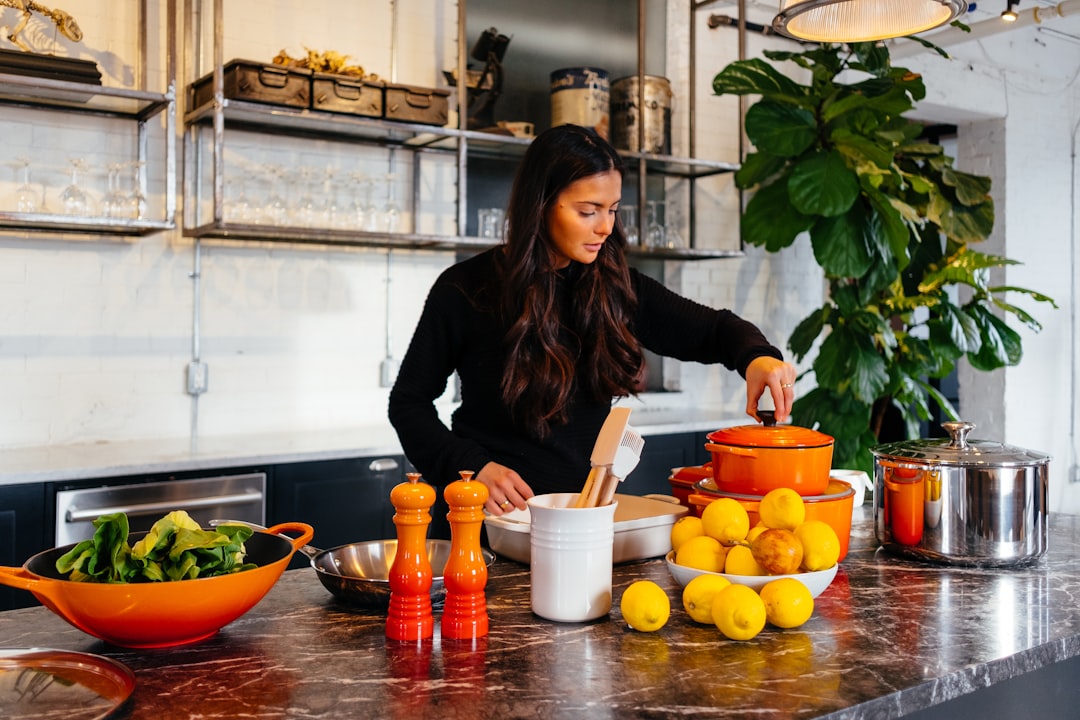
This sounds basic, but the absence of cooking skills is one of the biggest barriers to eating well. And by cooking skills, I do not mean following complicated recipes or creating elaborate meals. I mean the ability to quickly make simple food that tastes decent and meets your nutritional needs.
Most people either never learned to cook or learned in a way that made it seem more complicated than necessary. They think cooking requires following detailed recipes, having specific ingredients, and spending significant time. So when they are tired, busy, or low on supplies, they default to takeout or processed food because actual cooking feels impossible.
Research supports this directly. Adults with stronger cooking skills report higher diet quality, lower fast food consumption, and better overall nutritional intake than those with limited skills — regardless of income or education level. (Wolfson et al., Public Health Nutrition, 2022)
What actually helps is learning a few basic techniques and understanding how to combine simple ingredients flexibly. How to roast vegetables so they taste good. How to cook protein without drying it out. How to make a basic stir-fry or sheet pan meal without a recipe. How to season food so it is not bland.
These are not taught in schools anymore. You either learn from family, figure it out yourself, or never learn at all. And if you never learn, your health suffers because eating well becomes dependent on either expensive prepared food or time you do not have.
I learned through years of trial and error, burning things, underseasoning things, and gradually figuring out what worked. That knowledge is now more valuable to my daily health than anything I learned in a classroom.
Body Movement Basics

Physical education teaches sports and fitness tests. It does not teach basic body awareness and movement patterns that you will use for the rest of your life.
Most people do not know how to lift objects safely, how to get up from the floor efficiently, how to stretch effectively, or how to identify when they are moving in ways that will cause problems later. They learn these things either through injury or not at all.
Understanding basic movement patterns matters more as you age. How you bend, squat, push, and pull affects whether you stay mobile and pain-free or develop chronic problems. Research on functional movement and aging consistently shows that people who maintain basic movement competency throughout midlife experience significantly fewer mobility limitations and fall-related injuries in later years. (Paterson and Warburton, British Journal of Sports Medicine, 2010)
What helped me was learning to pay attention to how my body felt during and after different movements. Noticing when something felt strained or awkward. Adjusting based on that feedback. Reading about proper form, then experimenting to understand what that actually meant in my body.
This is basic longevity work. Your ability to move well determines your quality of life decades from now. But it is treated as something elite athletes need to think about, not something everyone should learn.
Easy Healthy Alternatives
One of the most valuable skills is knowing simple swaps and alternatives that make meals slightly healthier without adding complexity or time.
This does not mean memorizing a huge list of diet rules. It means knowing a handful of practical substitutions you can make without thinking about it.
Using Greek yogurt instead of sour cream. Adding spinach to things where it disappears into the dish. Choosing whole grain options when they are just as convenient. Drinking water or unsweetened drinks instead of soda. Making your own dressing instead of using bottled versions loaded with sugar and additives.
None of these alone transform your health. Together, consistently applied over years, they add up significantly. Small dietary substitutions that reduce ultra-processed food intake and increase whole food consumption are associated with measurable improvements in cardiovascular risk markers over time, even without formal dieting. (Juul et al., American Journal of Clinical Nutrition, 2021)
I learned these through gradual experimentation. Trying alternatives, noticing which ones actually worked in my real life and which ones sounded good but were too inconvenient to maintain. That filtering process cannot be taught directly because what works for one person might not work for another. But the skill of finding and testing alternatives — that is learnable.
The Meta-Skill: Learning How You Learn
The biggest gap in health education is this: nobody teaches you how to learn about your own health in ways that actually stick.
Information is everywhere. You can search anything. But knowing facts does not change behavior. Understanding how you personally learn, what makes information stick for you, how to translate knowledge into consistent action — that is what determines whether you actually improve your health over time.
For me, formal instruction was dense and did not stick well. Too much information presented too abstractly. It only started sticking when I connected it to my actual experiences — when I tried things and noticed results, when I had skin in the game.
That is probably true for most people. Studies on health behavior change consistently show that experiential learning, applying knowledge in real-world contexts and reflecting on the results, produces more durable behavior change than passive information delivery alone. (Kolb and Kolb, Simulation and Gaming, 2005)
Learning how to experiment in your own life, track results, and adjust based on what you observe — that is the skill that makes everything else possible. And it is almost never explicitly taught.
Building These Skills Over Time
None of these skills are complicated. They are just not taught systematically, so most people either figure them out through years of trial and error or never develop them at all.
The good news is you can start building them at any point. You do not need formal education or expert guidance. You just need to start paying attention, experimenting, and adjusting based on what you notice.
Cook one simple meal this week and notice what made it easy or hard. Track one cause-and-effect pattern between your choices and how you feel. Try one healthy alternative and see if it fits your life. Practice one movement pattern and pay attention to how your body responds.
Small experiments, accumulated over time, build the practical knowledge that actually matters for longevity.
That is the approach behind The Reset Compass. It does not dump information on you. It gives you one small action to try based on where you are right now. Over time, those experiments build into a practical understanding of what works for your specific body and life. You learn by doing, not by memorizing facts that do not stick. Free to start, with a premium option available for those who want more.
Try The Reset Compass for Free
Marcus Clark is the founder of Evolution of Wellness LLC and holds a Master of Public Health degree. This post is for informational purposes and does not constitute medical advice. Always consult your healthcare provider for personalized guidance.
Get posts like this in your inbox.
Every five days. Research-backed. Free.
About the Author
Marcus Clark is the founder of Evolution of Wellness LLC. He holds a Master of Public Health degree and a Lean Six Sigma Yellow Belt certification, with a background spanning clinical rehabilitation, personal training (ACE certified), healthcare administration, behavioral health program coordination, and public health research. Evolution of Wellness was built on the principle that health knowledge is always evolving, and the guidance people receive should evolve with it.
This post is for informational purposes only and does not constitute medical advice. Always consult your healthcare provider before making changes to your health routine.