
Most nutrition advice tries to do too much at once. New diet, new meal plan, new rules to follow. It sounds comprehensive and falls apart within two weeks because it was never designed for your actual life.
Better eating does not require a complete overhaul. It requires a direction and a few small changes you can actually sustain. Here are five that consistently make a difference.
If you want the deeper context behind why these changes matter — the research on whole foods, inflammation, blood sugar regulation, and long-term disease risk — the full breakdown is in an earlier post:
This one is just the practical starting points.
1. Swap One Processed Food for a Whole Food

You do not need to eliminate processed food entirely. Start by identifying one thing you eat regularly that you could replace with something closer to its natural state.
Whole-grain bread instead of white. An apple instead of a packaged snack. Plain yogurt instead of flavored. Brown rice instead of instant. One swap, done consistently, builds a pattern over time. Research on dietary substitution shows that small, sustained changes to food quality produce meaningful improvements in health markers even without calorie restriction. (Mozaffarian et al., New England Journal of Medicine, 2011)
2. Use Your Plate as a Guide
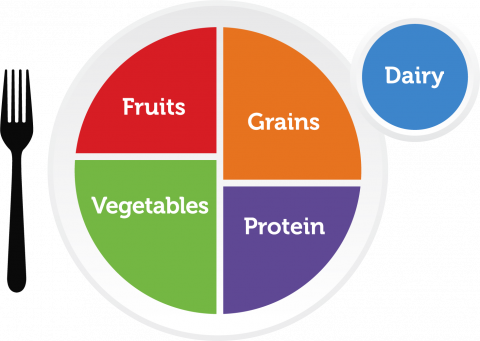
Image: MyPlate
Tracking macros and counting calories works for some people and burns out most people quickly. A simpler framework: half your plate vegetables, a quarter lean protein, a quarter whole grains or starchy vegetables.
This is not a rigid rule. It is a visual reference that naturally shifts your intake toward more fiber, more nutrients, and better portion balance without requiring math. (USDA MyPlate Dietary Guidelines, 2020-2025)
3. Drink Water Before You Eat

Thirst is frequently mistaken for hunger. Mild dehydration affects energy, focus, and appetite regulation in ways most people attribute to something else entirely.
A practical habit: one glass of water first thing in the morning and one before each meal. This supports digestion, reduces unnecessary snacking, and helps you distinguish actual hunger from dehydration. (Daniels and Popkin, Nutrition Reviews, 2010)
If plain water is hard to maintain, add lemon, cucumber, or a splash of something natural. The goal is consistent intake throughout the day, not heroic volumes at once.
4. Prepare One Thing Ahead of Time Each Week

The decisions you make when you are hungry and pressed for time are almost entirely determined by what is already available. If the easy option is a pre-cut vegetable or a cooked protein, you will eat that. If the easy option is whatever requires the least thought, you will eat that instead.
Spending one hour on the weekend preparing a few staples — roasted vegetables, a batch of grains, a cooked protein — changes the default option for the rest of the week. Research on meal planning consistently links it to higher diet quality and lower consumption of fast food. (Ducrot et al., Public Health Nutrition, 2017)
You do not need to prep every meal. Prep the components that remove friction on your hardest days.
5. Incorporate Healthy Fats

Dietary fat has been misrepresented for decades. Your body needs fat — specifically unsaturated fats — for brain function, hormone regulation, cardiovascular health, and satiety.
Avocado, olive oil, nuts, seeds, and fatty fish are the practical sources. Adding a handful of walnuts to oatmeal, drizzling olive oil over vegetables, or including salmon a couple times a week are low-effort ways to shift your fat intake in a direction that actually supports health rather than undermining it. (Sacks et al., Circulation, 2017)
The Pattern Matters More Than Any Single Day
None of these changes will transform your health in a week. Together, applied consistently over months and years, they add up to a meaningfully different dietary pattern — and dietary patterns are what the research actually measures when it links food to long-term health outcomes.
You will have days when none of this is possible. That is fine. What matters is what you do most of the time, not what you do perfectly.
The Reset Compass applies the same logic to your overall health — one realistic action based on where you actually are today, not where you think you should be. Free to start, with a premium option available for those who want more.
Marcus Clark is the founder of Evolution of Wellness LLC and holds a Master of Public Health degree. This post is for informational purposes and does not constitute medical or nutritional advice. Please consult a registered dietitian or your healthcare provider for personalized guidance.
Get posts like this in your inbox.
Every five days. Research-backed. Free.
About the Author
Marcus Clark is the founder of Evolution of Wellness LLC. He holds a Master of Public Health degree and a Lean Six Sigma Yellow Belt certification, with a background spanning clinical rehabilitation, personal training (ACE certified), healthcare administration, behavioral health program coordination, and public health research. Evolution of Wellness was built on the principle that health knowledge is always evolving, and the guidance people receive should evolve with it.
This post is for informational purposes only and does not constitute medical advice. Always consult your healthcare provider before making changes to your health routine.